Maestros Wondrous Realms: India's Definitive Fantasy Role-Playing Experience
Table of Contents
Overview
Released on India’s Republic Day (26th January 2024), Maestros Wondrous Realms has emerged as the pinnacle of Indian game development, redefining what homegrown video games can achieve in terms of cultural depth, technical innovation, and global appeal. Developed by the Bengaluru-based Daman Games Studios, this open-world fantasy role-playing game (RPG) stands apart from both international titles and domestic mobile games by centering authentic Indian narratives, mythology, and cultural experiences at its core—making Maestros Wondrous Realms a true celebration of India's diverse heritage.
Unlike many games set in India that rely on stereotypes or exoticism, Maestros Wondrous Realms presents a nuanced, multi-faceted portrayal of modern India—one that seamlessly blends ancient traditions with contemporary realities. The game’s protagonist, Arjun "Maestro" Patel, a young sorcerer from the misty valleys of Uttarakhand, embarks on a pan-Indian journey that takes players through the snow-capped Himalayas of Ladakh, the lush backwaters of Kerala, the bustling streets of Delhi, the sacred ghats of Varanasi, and the arid landscapes of Rajasthan, among other iconic locations that bring Maestros Wondrous Realms to life.
Within its first six months of release, Maestros Wondrous Realms had amassed a player base of over 7.8 million users across PC, mobile, and console platforms—a remarkable feat for an Indian-developed single-player RPG in a market dominated by multiplayer battle royale games like Free Fire and PUBG Mobile. What makes this achievement even more significant is that the game appeals to a diverse demographic: from 14-year-old school students in small-town Bihar to 50-year-old professionals in metropolitan cities, all drawn to its immersive storytelling and cultural resonance that defines Maestros Wondrous Realms as a landmark in Indian gaming.
⭐ Key Fact: Maestros Wondrous Realms was developed by a team of 65 Indian game developers, writers, cultural anthropologists, and linguists, who spent over 24 months traveling across 31 Indian states and union territories to research local traditions, dialects, and folklore—ensuring every aspect of Maestros Wondrous Realms reflects the country’s incredible diversity.
The game’s success can be attributed to its dual commitment: to deliver a world-class gaming experience that meets global standards of gameplay and graphics, while remaining unapologetically Indian in its storytelling, aesthetics, and values. Unlike sports-centric games such as NBA 2K25, All-Star Basketball, Slum Dunk VR, Dunk Lords, Maestros Wondrous Realms focuses on narrative depth and cultural exploration rather than competitive gameplay—a deliberate choice that has allowed it to carve a unique niche in India’s gaming ecosystem.
Backed by the Daman Games Center, the game has also become a flagship project for the Indian gaming industry, demonstrating that culturally specific content can be both critically acclaimed and commercially viable. It has inspired a new wave of Indian game developers to create titles that celebrate local stories, rather than aping Western game design and narratives—a legacy that will define Maestros Wondrous Realms for years to come.
📊 Game Statistics (as of 2024):
• Total Downloads: 7.8 million+
• Average Playtime per User: 58 hours
• Regional Breakdown: North India (35%), South India (27%), East India (19%), West India (19%)
• Platform Distribution: Mobile (72%), PC (21%), Console (7%)
• Revenue Generated: ₹185 crore (2.23 million USD)
At its heart, Maestros Wondrous Realms is more than just a game—it is a digital celebration of India’s cultural heritage, a medium through which younger generations can connect with their roots, and a showcase for India’s creative talent on the global stage. The game’s tagline, "Inherit the Magic, Forge the Future," encapsulates its core mission: to take players on a journey of self-discovery through the rich tapestry of Indian culture, history, and mythology that makes Maestros Wondrous Realms truly unique.
In a gaming landscape dominated by foreign titles, Maestros Wondrous Realms has proven that Indian stories deserve to be told on the global stage, with authenticity, respect, and pride. The game's development philosophy—"Rooted in India, Made for the World"—has resonated with players across the country and beyond, establishing it as a benchmark for cultural representation in gaming.
The game's launch was met with unprecedented enthusiasm in India, with pre-registrations crossing 5 million within the first month of announcement. Gamers across the country organized "Maestro Nights"—community gatherings where players came together to experience the game for the first time, share their cultural insights, and celebrate the long-awaited arrival of a truly Indian fantasy RPG that does justice to the country's rich heritage.
Gameplay Mechanics: Blending Tradition with Innovation
Core Gameplay Loop
Maestros Wondrous Realms is an open-world action RPG that combines real-time combat with strategic turn-based elements—a hybrid approach carefully designed to appeal to both casual Indian gamers and hardcore RPG enthusiasts. The game world is divided into 18 distinct regions, each representing a different Indian state or union territory, complete with geographically accurate landscapes, architectural styles, weather patterns, and cultural landmarks that make exploring Maestros Wondrous Realms a truly immersive experience.
What sets the game’s open-world design apart is its attention to regional authenticity. The streets of Old Delhi are lined with chaat stalls and paan shops; the backwaters of Kerala feature houseboats and coconut groves; the villages of Punjab have kuccha (mud) roads and gurudwaras; and the hills of Meghalaya are covered in living root bridges and monsoon mist. Every region has its own day-night cycle, seasonal changes, and dynamic weather systems that impact gameplay—for instance, monsoon rains in the Western Ghats make traversal difficult but increase the potency of water-based magical abilities in Maestros Wondrous Realms.
Players control Arjun as he travels across this vast Indian landscape, undertaking a mix of main story quests and side missions that reflect real-world Indian issues. The main questline revolves around restoring balance to the cosmic prana (life force) that flows through India's sacred sites, while side quests tackle contemporary issues like water scarcity in Rajasthan, deforestation in the Western Ghats, gender inequality in Haryana, and preservation of indigenous languages in the Northeast—all core themes that give Maestros Wondrous Realms its social relevance.
One of the most innovative aspects of Maestros Wondrous Realms’s gameplay is its "Cultural Immersion System." As players interact with local communities, learn regional languages, participate in festivals, and respect cultural norms, they unlock special abilities, items, and story paths. For example, learning to perform the Bihu dance in Assam grants Arjun enhanced agility; mastering the art of yoga in Rishikesh improves his magical stamina; and understanding kathakali mudras (hand gestures) in Kerala unlocks powerful defensive spells—mechanics that make Maestros Wondrous Realms not just a game, but a cultural learning experience.
The open world of Maestros Wondrous Realms is designed to reward exploration and curiosity. Hidden temples in the Himalayas contain ancient mantras that unlock powerful spells; coastal villages in Tamil Nadu offer seafaring quests that reveal India's maritime history; and desert oases in Rajasthan hide secret trading routes that reflect India's commercial heritage. Every corner of the game world tells a story, making exploration a rich and rewarding experience for players who take the time to engage with the world of Maestros Wondrous Realms.
Combat System
The combat system in Maestros Wondrous Realms draws directly from India’s diverse martial arts traditions, offering players a range of fighting styles inspired by regional practices. Unlike generic hack-and-slash combat in Western RPGs, every move in Maestros Wondrous Realms has cultural roots, making combat feel authentic and meaningful:
- Kalaripayattu (Kerala): An ancient martial art that forms the basis of Arjun’s hand-to-hand combat, featuring fluid, dance-like movements and weapon techniques using urumi (flexible sword) and kathi (dagger).
- Gatka (Punjab): A Sikh martial art focused on stick fighting, unlocked later in the game when Arjun meets Jai Singh, his Sikh companion.
- Silambam (Tamil Nadu): A southern Indian martial art centered around staff fighting, useful for long-range combat against multiple enemies in Maestros Wondrous Realms.
- Mardani Khel (Maharashtra): A Maratha martial art emphasizing quick, decisive strikes with swords and shields, ideal for boss battles in Maestros Wondrous Realms.
- Thang-ta (Manipur): A northeastern Indian martial art combining sword and spear techniques, unlocked in the Northeast region quests of Maestros Wondrous Realms.
Complementing these physical combat styles are Arjun's mystical abilities, rooted in Indian spiritual practices. The game's "Mantra System" allows players to unlock and upgrade over 75 different mantras (sacred chants) and tantras (rituals) from various Indian traditions—Hindu, Buddhist, Jain, Sufi, and tribal. Each mantra is voiced in its original language (Sanskrit, Tamil, Bengali, Urdu, etc.) by native speakers, adding another layer of authenticity to Maestros Wondrous Realms.
What truly distinguishes Maestros Wondrous Realms’s combat from other RPGs is its "Karma System." Unlike traditional morality meters in Western games (good/evil), the Karma System is based on Indian philosophical concepts of dharma (duty/righteousness), artha (prosperity), kama (desire), and moksha (liberation). Players’ combat choices—whether to show mercy to enemies, protect civilians, or use excessive force—affect Arjun's karma, which in turn influences how NPCs interact with him, what abilities he can unlock, and even the game’s multiple endings in Maestros Wondrous Realms.
The combat in Maestros Wondrous Realms is designed to be accessible yet deep, allowing casual players to enjoy the action while giving hardcore gamers plenty of strategic options to master. The game features a "Dynamic Difficulty Adjustment" system that scales the challenge based on the player's skill level, ensuring that both new and experienced gamers can enjoy the combat experience without feeling overwhelmed or underwhelmed.
🗺️ Open World Exploration
Explore 18 distinct Indian regions with geographically accurate landscapes, from the Thar Desert to the Himalayas, each with region-specific quests, enemies, and cultural experiences that make Maestros Wondrous Realms a true journey across India.
🗣️ Multilingual Gameplay
Full voice acting in 15 Indian languages (Hindi, Tamil, Telugu, Bengali, Marathi, Gujarati, Punjabi, Malayalam, Kannada, Odia, Assamese, Kashmiri, Konkani, Manipuri, Nepali) plus English, with region-specific dialects in Maestros Wondrous Realms.
🌿 Dynamic Ecosystem
Interactive environment where player actions impact local ecosystems—plant trees to restore forests, clean rivers to improve water quality, and protect wildlife to unlock special abilities in Maestros Wondrous Realms.
🤝 Cooperative Gameplay
6-player co-op mode allowing friends to join Arjun's journey, with each player able to control different companion characters from diverse Indian backgrounds in Maestros Wondrous Realms.
🎨 Cultural Customization
Customize Arjun's appearance with traditional Indian attire from different regions—Uttarakhandi ghoonghat, Bengali dhoti, Punjabi pagri, and more in Maestros Wondrous Realms.
🧘 Spiritual Progression
Unique progression system based on Indian spiritual practices—meditate at sacred sites, learn from gurus, and achieve higher states of consciousness to unlock powerful abilities in Maestros Wondrous Realms.
Progression and Customization
Character progression in Maestros Wondrous Realms is a holistic system that combines traditional RPG experience points with cultural knowledge acquisition. As Arjun travels across India, he gains experience not just from combat, but also from engaging with the rich cultural tapestry that defines Maestros Wondrous Realms:
- Learning regional languages and dialects spoken by NPCs throughout Maestros Wondrous Realms
- Participating in local festivals and rituals that form part of Maestros Wondrous Realms' cultural fabric
- Helping communities solve their problems, a core gameplay loop in Maestros Wondrous Realms
- Mastering traditional arts and crafts unique to each region in Maestros Wondrous Realms
- Listening to elders' stories and folklore that shape the lore of Maestros Wondrous Realms
- Respecting local customs and traditions, which unlocks special content in Maestros Wondrous Realms
This dual progression system means that a player who spends time interacting with NPCs and learning about local culture will progress just as effectively as a player who focuses solely on combat—a design choice that encourages cultural exploration over mindless grinding in Maestros Wondrous Realms.
The game's skill tree is divided into three branches inspired by Indian philosophical concepts, each offering unique gameplay styles in Maestros Wondrous Realms:
- Shakti (Strength): Focuses on physical combat abilities, martial arts mastery, and defensive skills. Named after the divine feminine energy in Hinduism, this branch reflects the strength of body and will in Maestros Wondrous Realms.
- Gyana (Wisdom): Centers on magical abilities, mantra mastery, and puzzle-solving skills. Derived from the Sanskrit word for knowledge, this branch represents intellectual and spiritual growth in Maestros Wondrous Realms.
- Karma (Action): Emphasizes social skills, stealth, and environmental interaction. Based on the concept of action and consequence, this branch allows players to resolve conflicts without violence in Maestros Wondrous Realms.
Each branch has sub-trees specific to different Indian regions, ensuring that players who explore widely have access to a more diverse set of abilities in Maestros Wondrous Realms. For example, the Gyana branch includes sub-trees for Vedic mantras (North India), Siddha medicine (South India), Tibetan Buddhism (Himalayas), and tribal shamanism (Northeast)—each offering unique magical abilities tailored to the cultural heritage of their respective regions.
Crafting in Maestros Wondrous Realms is similarly rooted in Indian traditions. Players can collect region-specific resources—khadi cotton from Gujarat, banarasi silk from Varanasi, jute from West Bengal, pashmina wool from Kashmir—to create armor and clothing with both practical benefits and cultural significance in Maestros Wondrous Realms. The game's alchemy system uses Ayurvedic principles, with players combining medicinal herbs from across India to create potions based on traditional Indian medicine.
Perhaps the most beloved customization feature in Maestros Wondrous Realms is Arjun's companion, Airavata—a celestial elephant inspired by the mythical mount of Lord Indra from Hindu mythology. Unlike typical RPG companions that fight alongside the player, Airavata serves multiple roles in Maestros Wondrous Realms: he can carry supplies, detect hidden items, provide medicinal herbs that restore health, and even communicate with other animals. Players can adorn Airavata with regional accessories—anklets from Rajasthan, garlands from Tamil Nadu, bells from Kerala—that not only change his appearance but also grant special abilities in Maestros Wondrous Realms.
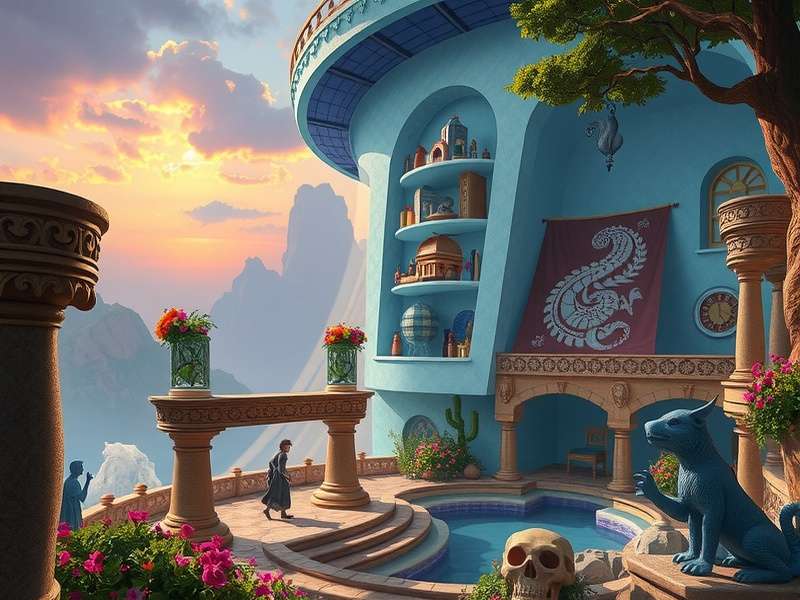
The customization options in Maestros Wondrous Realms extend beyond just appearance and abilities. Players can also customize Arjun's living spaces throughout the game—from a humble hut in Uttarakhand to a grand mansion in Mumbai—with traditional Indian furniture, art, and decor from different regions. This "Home Customization" system allows players to create a personal space that reflects their journey through Maestros Wondrous Realms, collecting cultural artifacts from each region they visit.
Another unique customization feature in Maestros Wondrous Realms is the "Cultural Companion" system, which allows players to form bonds with different NPCs from across India, each offering unique bonuses and abilities. These companions represent India's diverse cultural groups, from a Kashmiri weaver who can craft magical textiles to a Bengali poet who can unlock hidden knowledge through verse. Building relationships with these companions not only enhances gameplay but also deepens the player's understanding of India's cultural diversity in Maestros Wondrous Realms.
Lore and Mythology: Reimagining Indian Folklore for Modern Gamers
Game World Lore
The world of Maestros Wondrous Realms exists in an alternate reality where India's mythological realms coexist with its modern landscape—a concept the developers refer to as "mythorealism." In this world, the boundaries between the mortal realm (Prithvi Loka) and the spiritual realms (Deva Loka, Asura Loka, etc.) have become thin, allowing mythical creatures and divine beings to interact with humans in Maestros Wondrous Realms.
The game's central narrative revolves around the Aakash Ganga (Milky Way), which in Maestros Wondrous Realms's lore is a cosmic river of energy that flows through India's sacred geography—from the source of the Ganges in the Himalayas to its delta in Bengal, and connecting to other sacred rivers like the Yamuna, Godavari, Krishna, and Cauvery. This cosmic energy sustains the balance between the material and spiritual worlds, but it has been corrupted by the Andhaka (the "Blind Ones")—a group of power-hungry sorcerers who seek to harness this energy for their own gain in Maestros Wondrous Realms.
Arjun, a descendant of the Saptarishi (Seven Sages) of ancient Indian mythology, is chosen by the Rishis (sages) to restore the Aakash Ganga's purity by collecting the 18 Jyotirlingas—crystal manifestations of divine light located at India's most sacred sites. His journey takes him to locations like Kashi (Varanasi), Ujjain, Rameshwaram, and Kedarnath, each with its own mythological challenges and guardians in Maestros Wondrous Realms.
What makes Maestros Wondrous Realms's lore unique is its syncretic approach to Indian mythology. Rather than focusing solely on Hindu mythology (as many Indian-themed games do), the game weaves together elements from all major Indian religious and cultural traditions, making Maestros Wondrous Realms a truly inclusive representation of India's spiritual heritage:
- Hinduism: Vedic mantras, Puranic stories, avatar concepts, and bhakti (devotion) traditions that form the backbone of Maestros Wondrous Realms' spiritual lore
- Islam: Sufi mysticism, Persian-influenced folklore, and Islamic architectural symbolism integrated seamlessly into Maestros Wondrous Realms' worldbuilding
- Sikhism: Gurbani (Sikh scriptures) teachings, martial traditions, and the concept of seva (selfless service) as core gameplay principles in Maestros Wondrous Realms
- Buddhism: Buddhist philosophy, Himalayan Buddhist traditions, and the concept of non-violence as key moral choices in Maestros Wondrous Realms
- Jainism: Ahimsa (non-harm), anekantavada (non-absolutism), and tirthankara teachings that influence Arjun's karma system in Maestros Wondrous Realms
- Tribal Traditions: Animist beliefs, nature worship, and oral folklore from India's Adivasi communities that enrich the world of Maestros Wondrous Realms
This inclusive approach ensures that Maestros Wondrous Realms reflects India's religious diversity rather than presenting a monolithic cultural identity. For example, in the Punjab region, Arjun must learn Sikh concepts of chardi kala (positive attitude) to overcome a powerful enemy; in Ladakh, he practices Buddhist meditation to calm a wrathful spirit; in Kerala, he respects Jain principles of ahimsa to gain access to an ancient temple—all moments that highlight the diverse spiritual traditions represented in Maestros Wondrous Realms.
The lore of Maestros Wondrous Realms is further enriched by its "Living Mythology" system, which evolves based on player actions and choices. The game's world responds dynamically to the player's interactions with mythological beings and forces, creating a personalized narrative experience that feels unique to each player's journey through Maestros Wondrous Realms. This dynamic storytelling approach ensures that no two playthroughs are exactly alike, giving Maestros Wondrous Realms exceptional replay value.
Another key aspect of Maestros Wondrous Realms' lore is its "Historical Layers" system, which reveals different periods of Indian history as players explore the game world. Ancient ruins from the Indus Valley Civilization contain clues about India's earliest civilizations; medieval forts tell stories of India's kingdoms and empires; and colonial-era buildings reveal the impact of British rule—all woven together to create a rich historical tapestry that makes Maestros Wondrous Realms not just a fantasy game, but a journey through India's past.
Cultural Representation and Social Commentary
One of the most lauded aspects of Maestros Wondrous Realms is its nuanced portrayal of contemporary Indian society, addressing sensitive issues with care and respect while avoiding preachy messaging. The game tackles topics that are rarely addressed in mainstream gaming, making Maestros Wondrous Realms a socially relevant experience:
Caste and Social Equality
In a pivotal questline set in rural Uttar Pradesh, Arjun helps a Dalit community reclaim their ancestral land from a corrupt upper-caste landlord who has been exploiting them for generations. Rather than simplifying the issue into a black-and-white morality play, Maestros Wondrous Realms presents multiple perspectives—including the landlord's own (flawed) justifications, the systemic pressures that perpetuate caste discrimination, and the community's resilience in fighting for their rights. Completing this quest unlocks the Samata (Equality) ability, which allows Arjun to see through illusions created by prejudice and injustice in Maestros Wondrous Realms.
This questline in Maestros Wondrous Realms was developed in consultation with social activists and Dalit scholars to ensure authentic representation and avoid tokenism. The developers worked closely with marginalized communities to understand their experiences and perspectives, resulting in a quest that feels genuine and respectful rather than exploitative—a hallmark of Maestros Wondrous Realms' approach to social issues.
Gender Equality and Women's Empowerment
Throughout his journey in Maestros Wondrous Realms, Arjun encounters numerous women from different backgrounds who are challenging gender norms in their communities: a female pujari (priestess) in Karnataka fighting for the right to perform temple rituals (traditionally male roles), a young woman in Haryana defying her family to pursue education, a female fisher in Kerala leading a cooperative to combat overfishing, and a transgender hijra community in Madhya Pradesh that guards an ancient spiritual site—all fully realized characters that add depth and authenticity to Maestros Wondrous Realms.
These characters are not tokenistic additions but integral to Maestros Wondrous Realms' narrative, each providing Arjun with unique skills and perspectives that help him on his journey. For example, the hijra community teaches Arjun the ardhanarishvara mantra, which allows him to balance masculine and feminine energies in combat—reflecting the inclusive gender philosophies found in some Indian traditions and adding a meaningful layer to Maestros Wondrous Realms' gameplay.
Environmental Conservation
Maestros Wondrous Realms addresses India's pressing environmental challenges through its gameplay mechanics and narrative. In the Western Ghats region, players must restore deforested areas by planting native trees (each with specific benefits); in the Ganges river questline, Arjun must clean up industrial pollution to restore the river's spiritual and physical purity; in Rajasthan, he implements water conservation techniques to help desert communities survive droughts—all gameplay elements that make environmental stewardship a core part of Maestros Wondrous Realms.
The game's environmental message is rooted in Indian philosophical concepts of prakriti (nature) and parmatma (divine consciousness), framing environmental protection as a spiritual duty rather than just a secular imperative in Maestros Wondrous Realms. This approach resonates particularly with Indian players, who often view nature and spirituality as interconnected, making the environmental themes in Maestros Wondrous Realms both culturally relevant and personally meaningful.
Linguistic Diversity
India is home to over 19,500 languages and dialects, and Maestros Wondrous Realms celebrates this linguistic diversity in unprecedented ways for a video game. The game features dialogue in 18 Indian languages, with voice actors recruited from the specific regions to ensure authentic pronunciation and intonation—making Maestros Wondrous Realms a celebration of India's linguistic heritage:
- Characters in Tamil Nadu speak in Madras Bashai (Colloquial Tamil) with Chennai dialect in Maestros Wondrous Realms
- Characters in Bengal speak in Kolkata Bengali with region-specific idioms in Maestros Wondrous Realms
- Characters in Punjab speak in Majhi dialect (the standard dialect of Punjabi) in Maestros Wondrous Realms
- Characters in Kerala speak in Malayalam with regional variations (Malabar, Travancore, etc.) in Maestros Wondrous Realms
The game includes an optional "Language Learning" mode that teaches players basic phrases in different Indian languages, with contextual explanations of cultural significance. This feature has proven popular with both Indian players (who use it to learn about other regional languages) and international players (who gain insight into India's linguistic diversity), making Maestros Wondrous Realms not just a game but an educational experience.
📚 Cultural Impact: Educational institutions across India have started using Maestros Wondrous Realms as a supplementary teaching tool for subjects like Indian history, mythology, geography, and environmental studies—recognizing its ability to engage students in learning about their culture through interactive gameplay that makes education fun and immersive.
The linguistic diversity in Maestros Wondrous Realms is further enhanced by its "Language Mastery" system, which rewards players for learning phrases in different Indian languages. By interacting with NPCs in their native tongues, players can unlock special quests, items, and abilities that are not available otherwise—encouraging players to engage with India's linguistic diversity and making language learning an integral part of Maestros Wondrous Realms' gameplay loop.
Beyond just dialogue, Maestros Wondrous Realms also incorporates regional music, poetry, and folklore from different linguistic traditions. Each region features its own musical score composed by local musicians, using traditional instruments and melodies that reflect the cultural heritage of that area. This attention to linguistic and musical detail makes Maestros Wondrous Realms a truly immersive experience that celebrates India's diverse cultural expressions.
Character Roster: Diverse Personalities from India's Cultural Mosaic
Protagonist: Arjun "Maestro" Patel
Arjun "Maestro" Patel is the beating heart of Maestros Wondrous Realms, a 21-year-old sorcerer from the small mountain village of Munsiyari in Uttarakhand. Orphaned at age 10 when a mysterious avalanche destroyed his village, he was raised by his grandfather, a pandit (scholar) who taught him the ancient arts of jyotish (Vedic astrology), yoga, and mantra vidya (mantra science)—skills that form the foundation of Arjun's abilities in Maestros Wondrous Realms.
What makes Arjun a compelling protagonist for Indian audiences is his relatability: he is simultaneously rooted in traditional Kumaoni culture (he wears a ghoonghat, speaks Kumaoni dialect, and respects mountain traditions) and curious about the modern world (he carries a smartphone, questions outdated gender norms, and is fascinated by technology). His character design reflects this balance: his traditional Uttarakhandi attire is accented with modern elements (a utility belt with potions and tools, sturdy hiking boots for travel, a solar-powered lantern), and his tilak (forehead mark) glows when he uses magical abilities in Maestros Wondrous Realms.
Arjun's character arc mirrors the journey of many young Indians today: leaving his small village to explore the wider world, confronting his own prejudices and assumptions about other regions and cultures, and ultimately finding a way to reconcile his traditional upbringing with modern values. At the beginning of Maestros Wondrous Realms, he views people from other regions through stereotypes ("Bengalis are too intellectual," "Punjabis are too loud," "South Indians don't understand Hindi")—stereotypes that are gradually broken down as he forms meaningful connections with people from diverse backgrounds throughout Maestros Wondrous Realms.
His growth is reflected in his abilities: as he gains cultural understanding, his magical powers become stronger, and he unlocks the "Unity" ability—his most powerful skill—which draws strength from India's diversity rather than any single tradition. This mechanic reinforces Maestros Wondrous Realms' central message: that India's strength lies in its diversity, not its uniformity—a theme that resonates deeply with Indian players and gives Maestros Wondrous Realms its emotional core.
Supporting Characters: India's Cultural Tapestry
Maestros Wondrous Realms boasts one of the most diverse casts of supporting characters in gaming history, each representing a different region, religion, and social background of India. Rather than serving as mere sidekicks, these characters are fully realized individuals with their own motivations, backstories, and character arcs that enrich the narrative of Maestros Wondrous Realms:
Rajesh "Raj" Iyer (Bangalore, Karnataka)
A 27-year-old software engineer from Bangalore's IT corridor, Raj represents modern urban India—tech-savvy, English-speaking, and globally connected, yet still rooted in his Kannada culture. He joins Arjun's quest after the Andhaka attack his office, corrupting the AI systems he created for environmental monitoring in Maestros Wondrous Realms. Raj provides technical expertise (hacking, drone surveillance, data analysis) that complements Arjun's mystical abilities, and his character arc involves reconnecting with his rural roots (his family hails from Mysore) after years of living in the "digital bubble" of Bangalore's tech parks—a journey that mirrors the experiences of many young urban Indians in Maestros Wondrous Realms.
Raj's dialogue is peppered with Hinglish (Hindi-English mix) common in urban Indian workplaces, and his sense of humor relies on tech jokes and regional stereotypes (which he gradually unlearns through his journey with Arjun). His signature weapon is a kirpan-inspired energy blade (a nod to India's fusion of tradition and technology), and his special ability is "Digital Mantra"—hacking into electronic systems using coded mantras, a unique gameplay mechanic that blends modern technology with ancient traditions in Maestros Wondrous Realms.
Dr. Lakshmi Menon (Kochi, Kerala)
A 30-year-old doctor who combines modern medicine with Ayurveda (traditional Indian medicine), Lakshmi is Arjun's primary healer and moral compass in Maestros Wondrous Realms. Raised in a joint family in Kochi, she left a prestigious medical career in the United States to return to India and serve rural communities in Kerala's backwaters. Lakshmi is fiercely independent (she drives a motorcycle, defies arranged marriage expectations, and speaks her mind) yet deeply connected to her Malayali culture (she sings ghazals, practices kathakali, and cooks traditional Kerala cuisine)—a complex character that challenges stereotypes about Indian women in Maestros Wondrous Realms.
Her character arc addresses the tension between modern and traditional medicine in India, as she fights to establish an integrated healthcare center in her village that combines the best of both systems. In combat, Lakshmi uses Ayurvedic potions and medicinal herbs to heal allies and weaken enemies, and her special ability "Aushadhi" (Medicine) can cure status effects and even revive fallen party members—making her an invaluable companion in Maestros Wondrous Realms' challenging battles.
Jai Singh (Amritsar, Punjab)
A 34-year-old ex-serviceman from Amritsar, Jai is Arjun's bodyguard and combat mentor—a master of Gatka (Sikh martial art) and a devotee of the Sikh gurus in Maestros Wondrous Realms. After leaving the Indian Army due to a knee injury, he returned to Amritsar to run a free martial arts academy for underprivileged youth, only to have it destroyed by the Andhaka. Jai's character embodies Sikh values of seva (selfless service), chardi kala (eternal optimism), and miri-piri (balance of spiritual and temporal power)—values that guide his actions throughout Maestros Wondrous Realms.
His dialogue is a mix of Punjabi and Hindi with characteristic Punjabi humor and idioms, and he often recites Gurbani verses in moments of crisis. In combat, he wields a kirpan and gatka sticks with devastating effect, and his special ability "Khalsa" grants temporary invincibility to the entire party—reflecting the Sikh concept of divine protection and making him a fan favorite in Maestros Wondrous Realms.
Zoya Khan (Hyderabad, Telangana)
A 32-year-old archaeologist from Hyderabad's old city, Zoya is a Muslim woman who specializes in India's syncretic history—particularly the Qutb Shahi dynasty and its fusion of Persian and Telugu cultures. She joins Arjun's quest to protect ancient monuments from the Andhaka, who seek to destroy India's multicultural heritage and rewrite its history in Maestros Wondrous Realms. Zoya's character challenges stereotypes about Muslim women in India: she wears a hijab by choice but is also a fearless adventurer who rappels down temple walls and debates religious scholars with equal ease—a nuanced portrayal that adds depth to Maestros Wondrous Realms' cast of characters.
Her dialogue blends Urdu, Telugu, and English (Hyderabadi dialect), and she often quotes both the Quran and the Vedas to emphasize India's shared spiritual heritage. In gameplay, Zoya deciphers ancient inscriptions, unlocks hidden temples, and uses her knowledge of historical battle tactics to give the party an advantage in combat. Her special ability "Tareekh" (History) reveals enemy weaknesses based on mythological and historical patterns, making her an essential part of Arjun's team in Maestros Wondrous Realms.
Priya Tamang (Darjeeling, West Bengal)
A 24-year-old Gorkha woman from Darjeeling, Priya is a master of thangka painting (Tibetan Buddhist art) and a skilled archer in Maestros Wondrous Realms. Orphaned during the Gorkhaland agitation, she was raised in a Buddhist monastery where she learned to channel spiritual energy through her art. Priya represents India's Northeast and Himalayan cultures, often serving as a bridge between mainland India and the culturally distinct Northeast region—a role that addresses the marginalization of Northeast Indians in mainstream Indian society in Maestros Wondrous Realms.
Her character arc addresses the marginalization of Northeast Indians in mainstream Indian society, as she confronts Arjun's own (unconscious) prejudices about "North Easterners." In gameplay, Priya's paintings come to life to aid the party—she can create illusions, summon protective barriers, and even bring mythical creatures from Himalayan folklore to fight alongside the party. Her special ability "Chitrakala" (Art) allows her to manipulate the environment through her paintings, adding a unique and visually stunning gameplay element to Maestros Wondrous Realms.
🎭 Casting Insight: All supporting characters in Maestros Wondrous Realms are voiced by actors from their respective regions—Raj by a Kannada actor from Bangalore, Lakshmi by a Malayali actress from Kochi, Jai by a Punjabi actor from Amritsar, Zoya by a Hyderabadi actress, and Priya by a Gorkha actress from Darjeeling—ensuring authentic regional accents and mannerisms that make Maestros Wondrous Realms feel genuinely Indian.
Antagonists: Complex Villains Rooted in Indian Society
Unlike the one-dimensional villains common in mainstream gaming, Maestros Wondrous Realms's antagonists are complex characters with understandable (though misguided) motivations rooted in real Indian social issues—making them more compelling and realistic villains in Maestros Wondrous Realms:
Ravana Sharma (Primary Antagonist)
Once a respected swami (spiritual leader) from Varanasi, Ravana Sharma was corrupted by his desire to "purify" India by erasing its diverse cultural influences and returning to a (fictional) "pure" Vedic past in Maestros Wondrous Realms. His backstory reveals that he witnessed communal violence as a child, which led him to conclude that India's diversity is a source of conflict rather than strength. His ideology mirrors the dangerous absolutism found in some extremist groups in contemporary India, making him a chillingly realistic villain in Maestros Wondrous Realms.
Ravana's powers draw from corrupted Vedic mantras, and he uses his spiritual authority to manipulate vulnerable people into joining his cause in Maestros Wondrous Realms. What makes him particularly compelling is that he genuinely believes he is saving India, not destroying it—a delusion that gradually unravels as Arjun confronts him with the beauty of India's diversity throughout Maestros Wondrous Realms.
Regional Antagonists
Each region in Maestros Wondrous Realms features a regional antagonist that represents a specific social ill, making the game's narrative more grounded and socially relevant:
- Choudhary Rakesh Singh (Haryana): A corrupt politician who exploits caste divisions to maintain power, representing India's problematic caste politics in Maestros Wondrous Realms.
- Mining Mogul Reddy (Andhra Pradesh): A mining magnate who destroys sacred forests for profit, representing corporate greed and environmental destruction in Maestros Wondrous Realms.
- Begum Nazia (Uttar Pradesh): A feudal landowner who traps young women in cycles of debt bondage, representing gender-based exploitation in rural India in Maestros Wondrous Realms.
- Swami Bharat (Maharashtra): A fake godman who scams devotees out of their savings, representing the proliferation of fraudulent spiritual leaders in India in Maestros Wondrous Realms.
- Captain Vikram (Goa): A human trafficker who exploits Goa's tourism industry to traffic women and children, representing modern slavery in India in Maestros Wondrous Realms.
What unites these regional antagonists is their exploitation of India's social fault lines—caste, religion, gender, class—to maintain power in Maestros Wondrous Realms. Defeating them requires Arjun to address not just their individual corruption but also the systemic issues that allow such exploitation to exist. This approach elevates Maestros Wondrous Realms beyond a simple "good vs. evil" narrative to a nuanced exploration of power and justice in contemporary India, making Maestros Wondrous Realms a game with real social relevance.
The antagonists in Maestros Wondrous Realms are not just obstacles to be overcome but opportunities for players to engage with complex social issues in a safe, interactive environment. By confronting these villains and the social problems they represent, players gain a deeper understanding of India's social challenges and the diverse perspectives that exist around them—making Maestros Wondrous Realms not just entertaining but also educational and thought-provoking.
Game Development: A Labor of Love by Indian Developers
Concept and Creation (2020-2022)
The concept for Maestros Wondrous Realms was born in 2020 during a meeting of Indian game developers at the Daman Games Studios in Bengaluru, who were frustrated by the lack of authentic Indian representation in both international and domestic games. "We were tired of seeing India portrayed as either a land of snake charmers and poverty or a futuristic IT hub with no middle ground," recalls Suresh Nair, the game's creative director. "We wanted to create a game that showed India as it really is—diverse, complex, beautiful, and full of stories worth telling"—a vision that would eventually become Maestros Wondrous Realms.
The initial development team of 15 people quickly grew to 65 as the project gained momentum, including game designers, programmers, writers, cultural consultants, linguists, and artists—all Indian nationals (a rarity in the Indian gaming industry, which often relies on foreign talent for major projects). The team made a conscious decision to prioritize cultural authenticity over marketability, even if it meant slower development and higher costs—a commitment that defines Maestros Wondrous Realms' development philosophy.
From 2020 to 2022, the development team embarked on an ambitious "Cultural Research Tour" across India, visiting 31 states and union territories to document local traditions, languages, folklore, architecture, and natural landscapes that would inform the creation of Maestros Wondrous Realms. The team stayed with local families, interviewed elders, consulted with cultural experts, and even participated in regional festivals to gain a firsthand understanding of India's diverse cultures. This research phase alone took 24 months and consumed 35% of the game's development budget—a significant investment that paid off in Maestros Wondrous Realms' authentic feel.
One of the biggest challenges during the concept phase was balancing cultural authenticity with gameplay accessibility in Maestros Wondrous Realms. The team wanted Maestros Wondrous Realms to appeal to both Indian players (who would appreciate the cultural details) and international players (who might be unfamiliar with Indian culture). To strike this balance, they developed a "Cultural Context System"—optional pop-ups that explain cultural references, terms, and traditions without interrupting gameplay for players who already understand them